
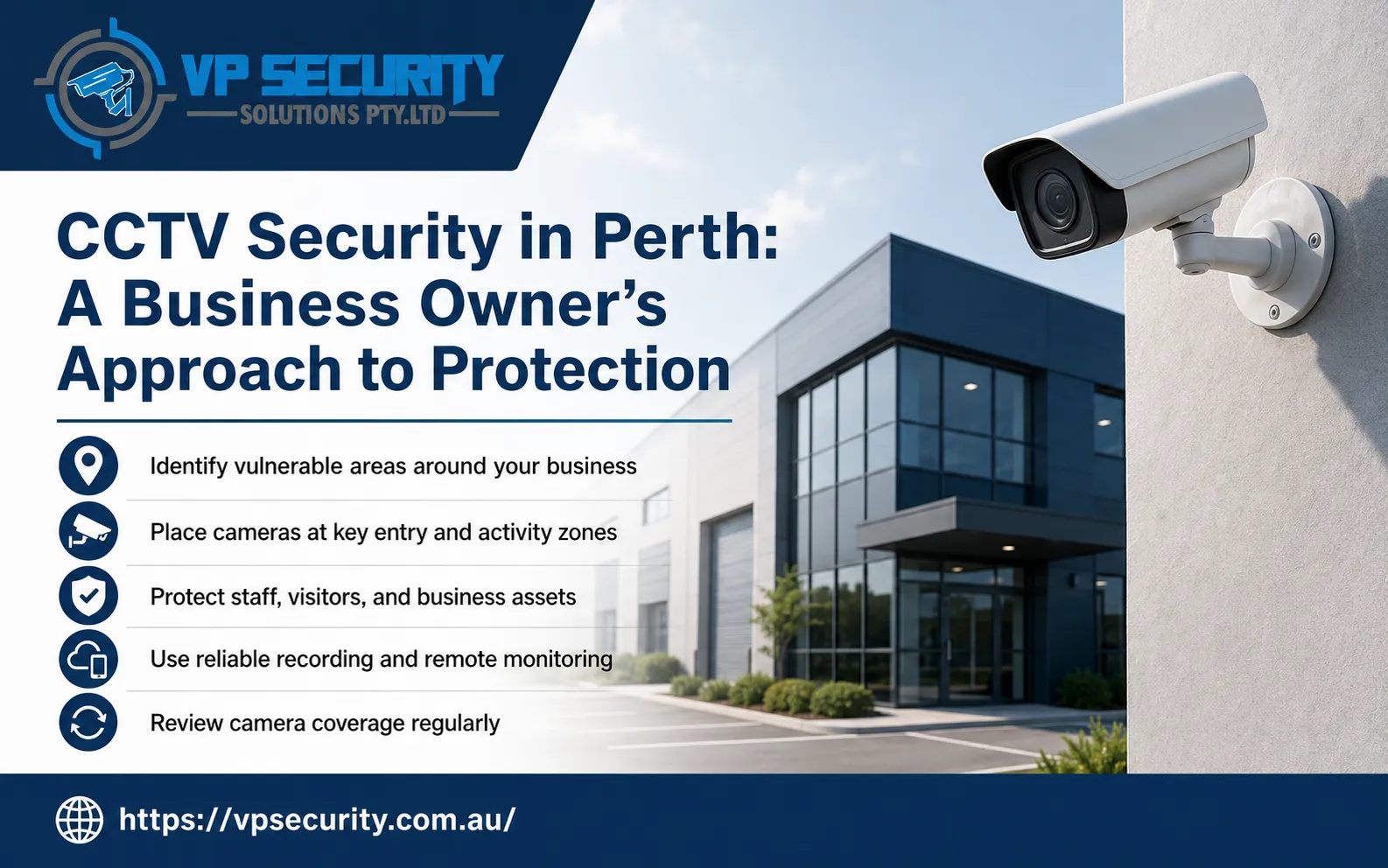
Running a business means managing risk every day. You need to protect your premises, staff, stock, tools, customers, equipment, and reputation. A considered approach to cctv security perth helps business owners move beyond basic monitoring and build a security solution that genuinely supports their operation. Instead of treating cameras as an afterthought, business owners should view CCTV as part of a wider protection and management strategy.
Perth businesses operate across many different environments, from retail stores and offices to warehouses, industrial sites, workshops, medical clinics, hospitality venues, schools, and commercial buildings. Each location has its own security concerns. Some businesses need to deter theft. Others need to monitor staff-only areas, control visitor movement, protect vehicles, or keep evidence in case of disputes. The best system is always the one that matches the real risks of the site.
Start With a Clear Risk Assessment
Before choosing cameras, it is important to understand what you are trying to protect. A business owner should look carefully at the property and identify where incidents are most likely to occur. Entry points, stock rooms, payment areas, rear doors, loading bays, car parks, and blind spots often need attention.
A practical risk assessment should ask:
-
Where could someone enter without being noticed?
-
Which areas contain valuable stock, tools, cash, or equipment?
-
Where do staff, customers, drivers, or contractors move through the site?
-
Are there poorly lit areas or hidden corners?
-
Has the business experienced theft, vandalism, disputes, or break-ins before?
-
Do managers need remote visibility when they are away?
Answering these questions helps create a system that is specific, useful, and cost-effective.
Plan Camera Coverage Carefully
Coverage planning is where many CCTV systems succeed or fail. Installing cameras without a clear plan may leave important gaps. A well-planned system considers the layout of the premises and places cameras where they will capture useful footage.
For example, cameras at entrances should be positioned to capture faces clearly. Cameras near stock areas should show movement around shelves, storage cages, or valuable equipment. Cameras in car parks should cover vehicles, gates, driveways, and pedestrian paths. Cameras near counters should show activity without creating unnecessary privacy concerns.
Good coverage is not only about the number of cameras. It is about placing the right cameras in the right locations.
Choose Cameras That Suit the Site
Different business areas may need different camera types. Outdoor cameras should be weather-resistant and suitable for changing light conditions. Internal cameras may need wide-angle views for open spaces. Entry cameras may need higher clarity to capture faces. Low-light areas may need cameras with strong night vision or smart illumination.
Choosing the right security cameras perth helps ensure the system performs well in real-world conditions. A camera that works well in a small office may not be suitable for a warehouse loading dock. A camera that is fine during the day may struggle at night if lighting is poor. Matching the camera to the environment is essential for reliable results.
Professional Installation Makes the Difference
Business premises need reliable security, and that starts with proper installation. Professional security camera installation perth ensures cameras are securely mounted, correctly angled, properly connected, and configured for dependable recording. It also ensures that cables, network settings, power supplies, storage, remote access, and user permissions are handled correctly.
A professional installer can also identify issues that may not be obvious at first. These may include glare from sunlight, poor night visibility, weak network points, blind spots, camera height problems, or insufficient recording capacity. Addressing these details early prevents frustration later.
Integrating CCTV With Daily Operations
CCTV is often seen only as a security tool, but it can also support day-to-day business management. Owners and managers can use camera access to check busy periods, confirm deliveries, monitor service areas, review incidents, and understand how people move around the premises.
This does not mean using cameras to micromanage staff. It means having practical visibility when it is needed. For example, a manager may quickly check whether a delivery has arrived, whether a gate was left open, or whether a customer dispute needs review. This kind of oversight can save time and improve decision-making.
Think About the Whole Security Picture
Cameras are powerful, but they work best when combined with other sensible security measures. Good lighting, strong locks, alarm systems, access control, clear procedures, and staff awareness all improve the overall protection of a business.
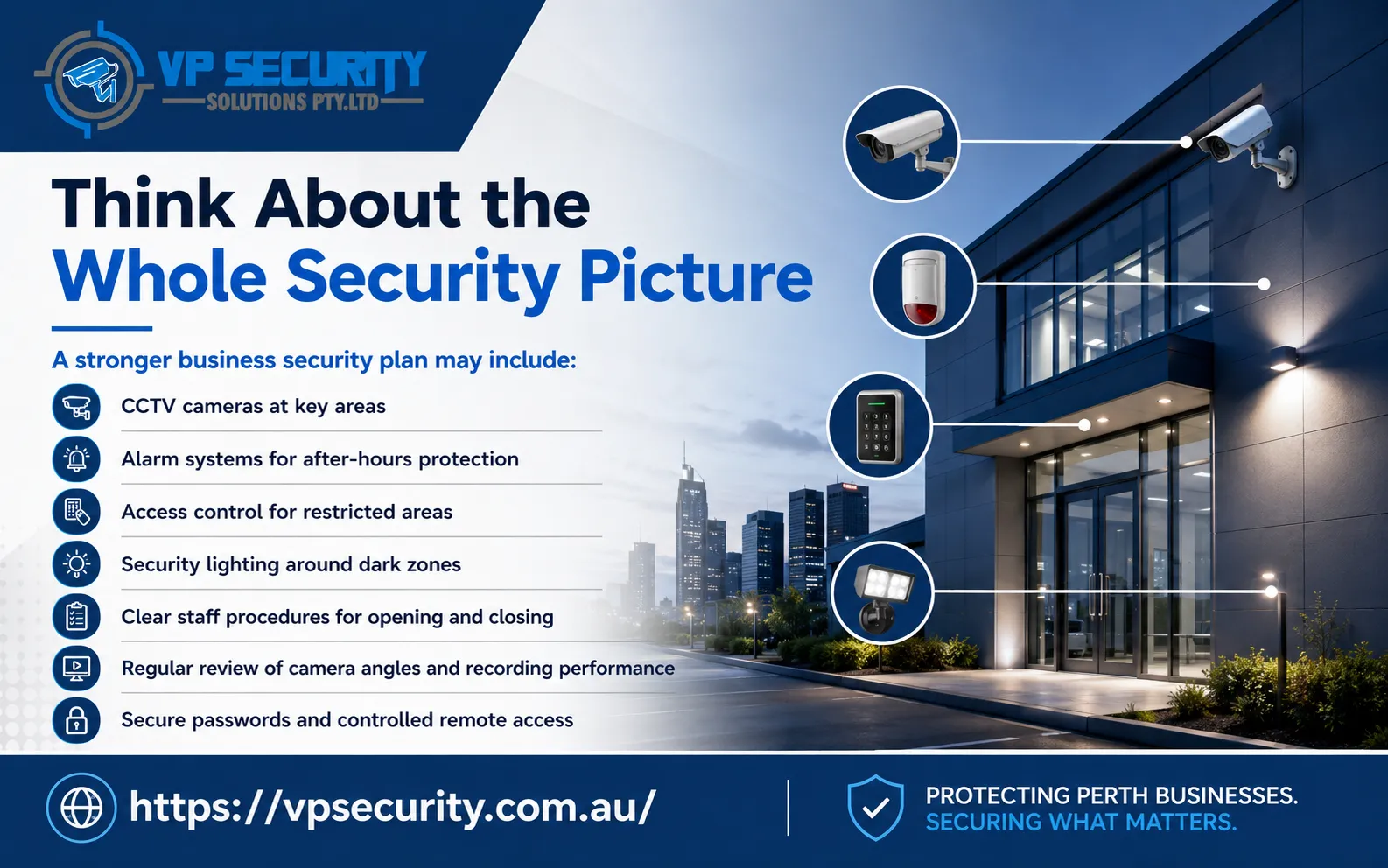
A stronger business security plan may include:
-
CCTV cameras at key areas
-
Alarm systems for after-hours protection
-
Access control for restricted areas
-
Security lighting around dark zones
-
Clear staff procedures for opening and closing
-
Regular review of camera angles and recording performance
-
Secure passwords and controlled remote access
When these measures work together, the business is better protected than it would be with cameras alone.
Storage, Recording, and Footage Access
A business CCTV system must record footage dependably and make it easy to retrieve when needed. Recording quality, storage capacity, retention period, and backup options should all be considered before installation. Some businesses may need longer recording periods because incidents are not always discovered immediately.
Footage access should also be simple for authorised users. If an incident occurs, the owner or manager should be able to find the relevant time period, review the footage, and export it if required. A system that records but is difficult to use can reduce the value of the investment.
Privacy and Responsible Use
Business owners should also think about privacy. Cameras should be used responsibly and placed in appropriate areas. They should protect the premises without creating unnecessary discomfort for staff or customers. Clear signage and sensible camera placement help create transparency.
CCTV should usually focus on entrances, exits, public areas, stock zones, work areas, and external spaces. Private areas should be avoided. A responsible approach builds trust while still improving security.
Why Choose VP Security
VP Security helps Perth business owners take a practical and strategic approach to protection. We assess the site, understand the risks, plan camera placement, recommend suitable equipment, and provide professional security camera installation perth for reliable performance. Our goal is to deliver systems that protect your business and remain easy to use.
We support businesses of different sizes and industries, from small commercial spaces to larger sites that require broader coverage. With local knowledge, professional workmanship, remote access setup, and ongoing support, we help business owners feel confident in their security decisions.
Final Thoughts
A strong business CCTV system begins with clear thinking. When you understand your risks, plan your coverage, choose suitable equipment, and work with experienced installers, the result is a system that offers genuine protection. It can deter crime, support staff and customer safety, record evidence, and give managers better oversight.
For Perth businesses, CCTV is not just about installing cameras. It is about creating a dependable security foundation that supports the business every day. With the right approach, your system can protect what matters while giving you greater peace of mind.