
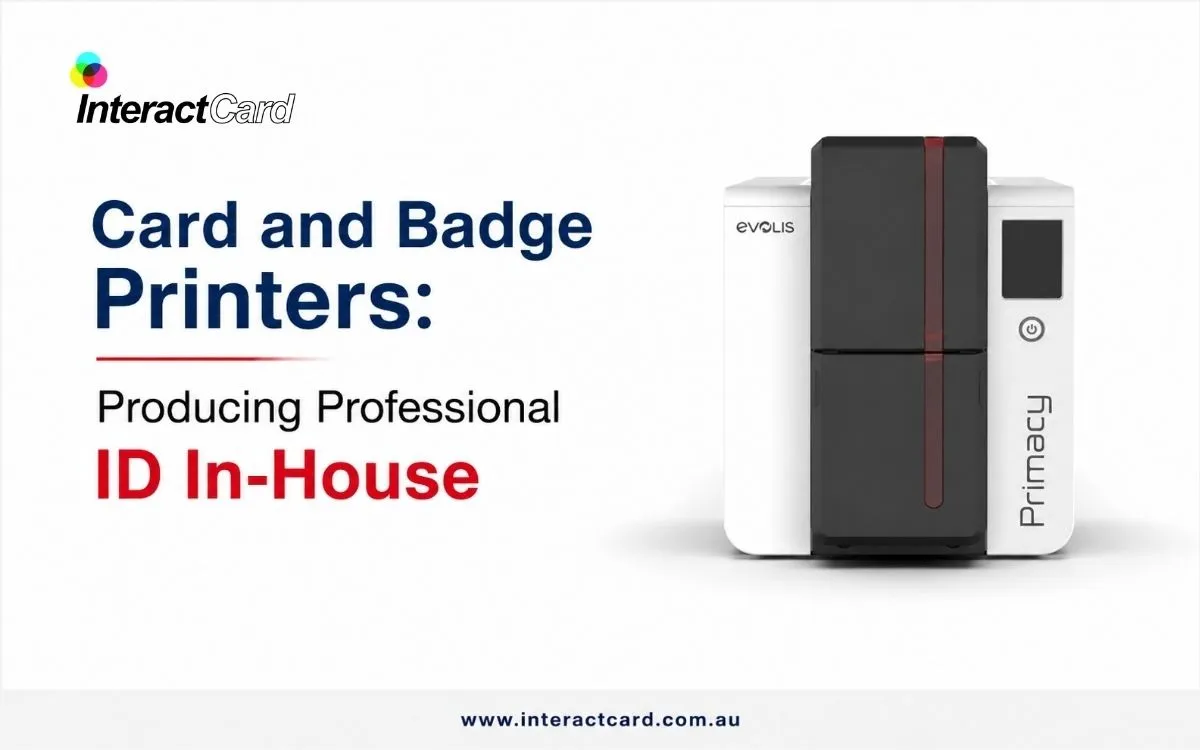
Organisations that issue staff identification, visitor badges, membership cards, access passes, or event credentials need a dependable way to produce professional cards quickly. Outsourcing can work for occasional large orders, but it often becomes inconvenient when cards are needed urgently or in small quantities. With the right card printers, an organisation can print cards and badges in-house, maintain control over the process, and respond faster to daily identification needs.
In-house production is especially useful for workplaces, schools, medical centres, clubs, gyms, councils, event organisers, and security teams. These organisations often need new cards for staff, replacement badges for lost cards, temporary visitor passes, or updated credentials when roles change. Being able to print cards on demand removes the delay of external ordering and gives your team more flexibility.
Why In-House Card and Badge Printing Matters
The main advantage of in-house printing is speed. When a new employee starts, a student enrols, a contractor arrives, or a visitor needs access, you can produce a card immediately. There is no waiting for a supplier, no minimum order quantity, and no need to keep large stocks of pre-printed cards that may become outdated.
In-house production also improves control. Your organisation manages the card design, personal information, print schedule, and issuing process. This can be important when cards include employee photos, internal identification numbers, access details, expiry dates, or sensitive information. Keeping the process internal may reduce errors and help maintain better data handling.
A Quality Printer Is the Foundation
A professional card and badge system begins with a reliable printer. A good plastic card printer produces clear images, readable text, and a durable finish. This matters because ID cards and badges are often used daily and are visible to customers, staff, security personnel, and visitors.
When cards look consistent and professional, they support trust and security. A faded photo, unclear name, or poorly printed barcode can create confusion or make the card less effective. High-quality print output helps ensure each badge is easy to read and suitable for regular use.
Choosing the Right Badge Printing Features
Badge printing requirements vary depending on the organisation. An event company may need temporary passes printed quickly in large batches. A workplace may need durable staff ID badges with photos and job titles. A healthcare facility may require clear role identification for nurses, doctors, contractors, and administration staff. A club or membership organisation may need cards that combine identification with member details.
This is why badge printers should be selected according to the actual use case. The right machine and setup can support fast printing, consistent design, and card durability. Depending on your needs, you may also require double-sided printing, encoding, protective overlays, or software that manages templates and personal data.
Important Features to Consider
Before buying equipment, review the features that will affect your daily workflow. Common considerations include:
-
Single-sided or double-sided printing
-
Print speed and expected monthly card volume
-
Photo quality and colour accuracy
-
Barcode or QR code clarity
-
Magnetic stripe, smart card, or contactless encoding
-
Card thickness and material compatibility
-
Software for templates, records, and photo capture
-
Cleaning and maintenance requirements
-
Availability of ribbons, blank cards, and support
The best printer is not always the one with the longest feature list. It is the one that fits your organisation’s card volume, card type, staff skill level, and future needs.
Card Design and Branding
A card or badge should be functional, but it should also reflect your organisation’s identity. Good design helps people quickly recognise the card as official. This may include your logo, brand colours, department labels, staff photos, expiry dates, or access levels.
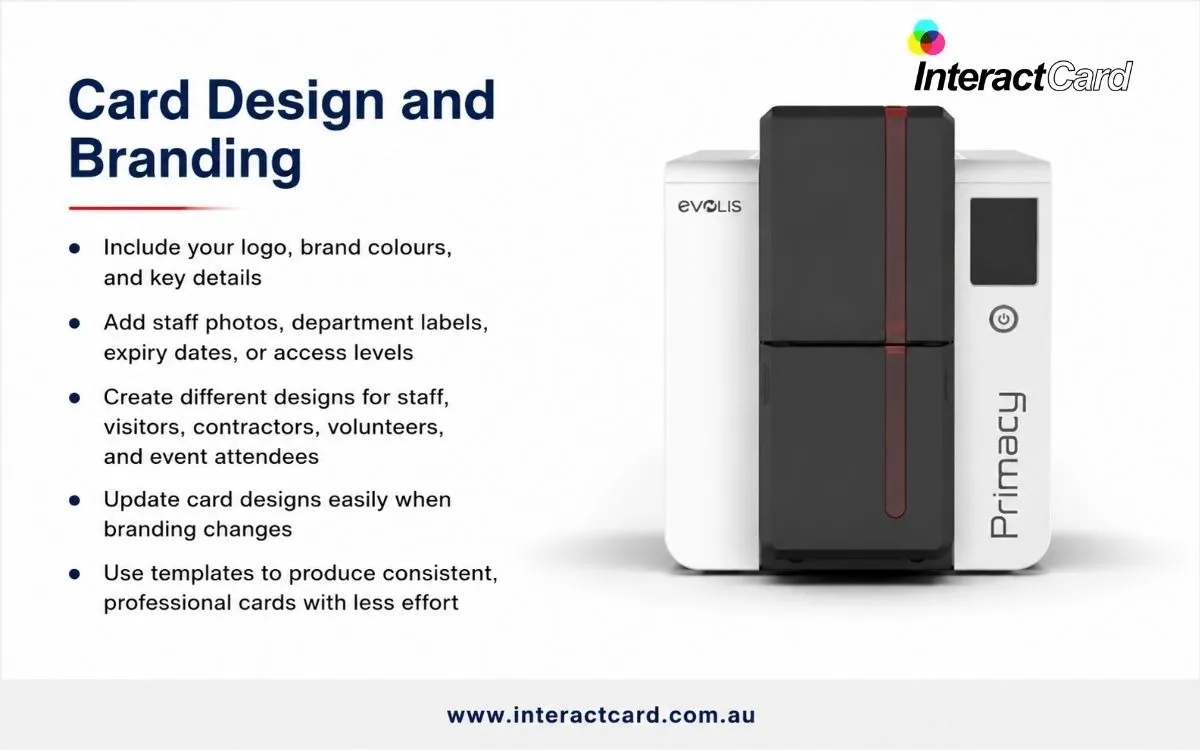
In-house printing gives you the flexibility to update card designs when your branding changes or when different departments need unique layouts. For example, permanent staff, visitors, contractors, volunteers, and event attendees may all require different card designs. With the right software, these templates can be created and reused, helping staff produce consistent cards with less effort.
Software and Data Management
The software used with your printer is important because it controls much of the production workflow. Good software allows users to create templates, import data, add photos, print batches, and reduce manual entry mistakes. It can also make it easier to maintain a consistent layout across all cards.
For larger organisations, data management may be just as important as print quality. You may need to update staff records, manage card expiry dates, or separate card types by department. A practical software setup can save time, reduce errors, and make the printing process easier for non-technical staff.
Running Costs and Consumables
The cost of in-house printing includes more than the printer itself. You also need blank cards, ribbons, cleaning kits, and possibly overlays or laminates. Understanding these running costs helps you compare options more accurately.
A printer with a slightly higher purchase price may provide better value if it has efficient ribbon use, reliable output, and accessible consumables. Downtime and waste should also be considered. If a printer frequently misprints cards or is difficult to maintain, the real cost may be higher than expected.
Security and Access Control Uses
Many organisations use cards and badges for more than visual identification. Cards may also be linked to access control systems, time attendance, secure areas, or membership validation. When this is the case, printer compatibility with encoding options becomes important.
Security-focused cards may include barcodes, QR codes, magnetic stripes, smart chips, or contactless technology. Some organisations may also benefit from visual security elements such as holographic overlays or tamper-resistant designs. Choosing equipment that supports these requirements from the beginning can reduce the need for future replacement.
Support, Training, and Maintenance
Even a simple printing setup benefits from good support. Staff may need help installing software, choosing ribbons, cleaning the printer, fixing print quality issues, or understanding card design settings. A supplier with experience in card production can help your organisation set up the system properly and use it with confidence.
Maintenance is also important. Card printers should be cleaned according to manufacturer recommendations to maintain print quality and prevent avoidable faults. Having access to the right cleaning supplies, consumables, and advice helps keep the printer reliable.
Building a Practical In-House Solution
A successful card and badge printing setup should be practical for the people using it. It should not be overly complex or difficult to maintain. The best system is one that allows trained staff to create cards quickly, accurately, and consistently.
To get the best result, review your expected card volume, card types, design requirements, security needs, and available support. A dependable plastic card printer can help your organisation produce professional cards and badges whenever they are needed without relying on external production timelines.
Final Thoughts
In-house card and badge printing gives organisations more control, faster turnaround, and better flexibility. By choosing suitable equipment, practical software, and reliable support, your team can produce professional identification for staff, visitors, members, contractors, and event attendees. For any organisation that issues cards regularly, a well-planned printing system can become a cost-effective and highly useful operational tool.