
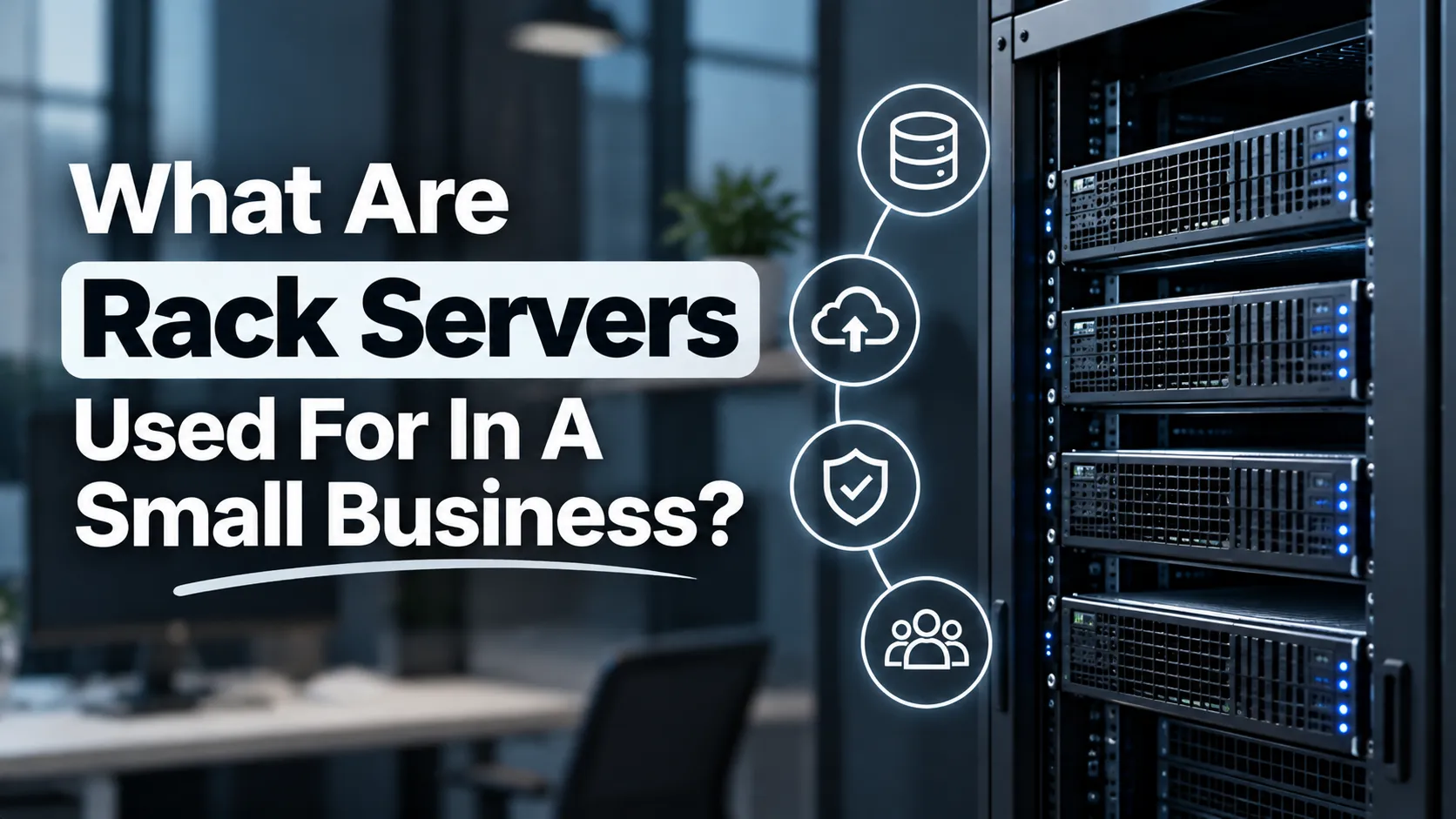
Rack servers are used in small businesses to run business applications, store and protect data, host websites, manage databases, support virtualization, and centralize IT operations.
They fit into standardized equipment racks, helping businesses organize hardware while saving floor space. Small businesses can use rack servers to manage accounting software, customer relationship management (CRM) systems, file sharing, inventory, cybersecurity tools, and other essential workloads from a centralized location.
A rack server is a practical choice for a growing business that needs reliable computing, expandable storage, and room to add hardware as requirements increase. The right configuration depends on the company’s workload, number of users, budget, available space, and future growth plans.
What Are the Main Uses of Rack Servers in Small Businesses?
Rack servers support several everyday business operations. They allow companies to run important applications on dedicated hardware instead of relying entirely on individual computers or multiple disconnected systems.
1. Hosting Business Applications
Small businesses use rack servers to host applications that employees need throughout the day. These include accounting platforms, enterprise resource planning (ERP) software, CRM systems, project management tools, and internal business applications.
A centralized server allows authorized employees to access shared applications over the company network. It also helps IT administrators manage software updates, user permissions, and system resources from one location.
For example, a distribution company can host inventory software on a rack server so its sales, warehouse, and finance teams can access consistent information.
2. Storing and Sharing Business Data
Rack servers provide centralized storage for documents, spreadsheets, financial records, project files, and other business information. Employees can access shared folders according to their assigned permissions.
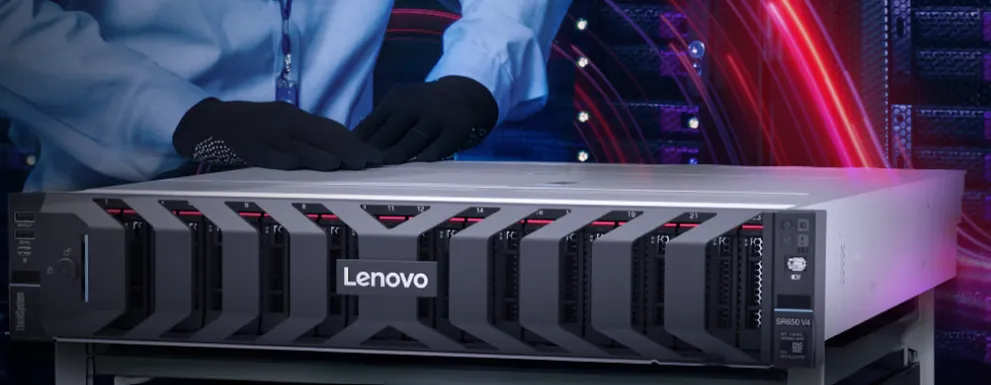
Businesses can configure suitable drives and storage capacity to match their data requirements. For example, Lenovo rack servers offer configurable storage options that businesses can evaluate based on their data volume and workload needs. They can also implement backup systems to protect important files against accidental deletion, hardware failure, or other incidents.
However, a server alone does not guarantee data protection. Businesses should maintain separate backups, restrict access to sensitive information, and test their recovery procedures regularly.
As more businesses adopt rack servers to support their IT infrastructure, the market continues to grow, with its value projected to surpass USD 247.09 billion by 2032.
3. Hosting Websites and Online Services
Businesses that operate websites, customer portals, internal platforms, or web applications can use rack servers to host these services.
A server can provide the processing power, memory, storage, and network connectivity required to handle application requests. The required capacity depends on website traffic, software complexity, and the number of concurrent users.
Small businesses can also use rack servers for development and testing environments before releasing software updates. Companies with modest hosting needs may prefer cloud hosting, while businesses requiring greater control over their infrastructure may consider on-premises servers.
4. Supporting Virtualization
Virtualization allows one physical server to run multiple virtual machines. Each virtual machine can support a separate operating system, application, or workload.
For example, a small business could use one suitably configured rack server to run a file server, an application server, and a testing environment. This approach can reduce the need to purchase and maintain separate physical machines.
Virtualization also helps businesses allocate computing resources more efficiently. However, administrators must provide enough processing power, memory, and storage for all workloads. Consolidating applications on one server also makes a suitable backup and recovery plan essential.
5. Managing Business Databases
Rack servers can host databases that store customer details, product information, sales transactions, supplier records, and financial data.
A properly configured database server helps applications retrieve and update information efficiently. Businesses can use it to support order processing, reporting, customer service, and inventory management.
Database performance depends on factors such as processor capacity, available memory, storage speed, and network performance. Companies should select hardware based on their database software and expected workload rather than purchasing the most powerful server available.
6. Supporting Cybersecurity and Network Management
Rack servers can host security applications, centralized logging tools, identity management systems, and network monitoring software. These tools help administrators manage access, identify unusual activity, and monitor the performance of business systems.
For example, a growing company can use a centralized monitoring platform to track server availability, application performance, and network issues.
Servers are only one part of a complete security strategy. Businesses should also configure firewalls, apply security patches, enforce strong authentication, and maintain appropriate access controls.
7. Processing Data and Supporting AI Applications
Small businesses can use rack servers to analyze operational data, generate reports, automate selected workflows, and run certain artificial intelligence applications.
A company might analyze sales trends, process production data, or use local inference for an AI application that needs to process information within its own environment.
The hardware requirements vary significantly. Basic reporting may require a conventional server, while demanding AI workloads may need specialized accelerators, additional memory, and faster storage. Businesses should evaluate actual software requirements before investing in GPU-equipped systems.
Why Should a Small Business Choose a Rack Server?
Rack servers offer several practical advantages for businesses that need dedicated computing infrastructure.
-
Space efficiency: Rack-mounted hardware fits into a shared enclosure, helping businesses organize servers, switches, and other equipment.
-
Scalability: Companies can add compatible servers or storage as their workloads grow, subject to available rack space, power, and cooling capacity.
-
Centralized management: IT teams can manage business applications and hardware from a more organized environment.
-
Flexible configurations: Businesses can select processors, memory, drives, network adapters, and expansion options to suit specific workloads.
-
Infrastructure consolidation: Virtualization can help companies run multiple services on fewer physical machines when resources are sufficient.
-
Improved service continuity: Suitable hardware, redundant components where configured, monitoring, and tested recovery procedures can help reduce operational disruption.
How Should a Small Business Choose a Rack Server?
Choose a rack server based on the applications you need to run, the number of users you support, your storage requirements, and your expected growth. Review these factors before making a purchase:
-
Processing power: Match the processor to your applications and workload.
-
Memory: Provide sufficient RAM for databases, virtualization, and concurrent users.
-
Storage: Compare SSD and HDD options, capacity, and backup requirements.
-
Expandability: Check available drive bays, memory slots, and network connections.
-
Reliability: Evaluate power redundancy, supported maintenance features, and recovery needs.
-
Operating costs: Consider electricity, cooling, licensing, support, and administration.
Rack servers come in different configurations, and options such as Lenovo ThinkSystem models can be evaluated based on processor performance, memory capacity, storage requirements, and future expansion needs. Select a system that matches your current workload without overlooking future expansion.
Conclusion: Are Rack Servers Worth It for Small Businesses?
Yes. Rack servers are worth considering when a small business needs centralized applications, shared data, virtualization, or greater control over its IT infrastructure. They are particularly useful for companies that expect workloads and storage requirements to increase.
However, a rack server may not be necessary for a small office that relies mainly on cloud applications and has limited local computing needs. In that situation, cloud services or a tower server may offer a simpler solution.
The right choice is the server that meets your business requirements, fits your budget, and supports reliable day-to-day operations.