
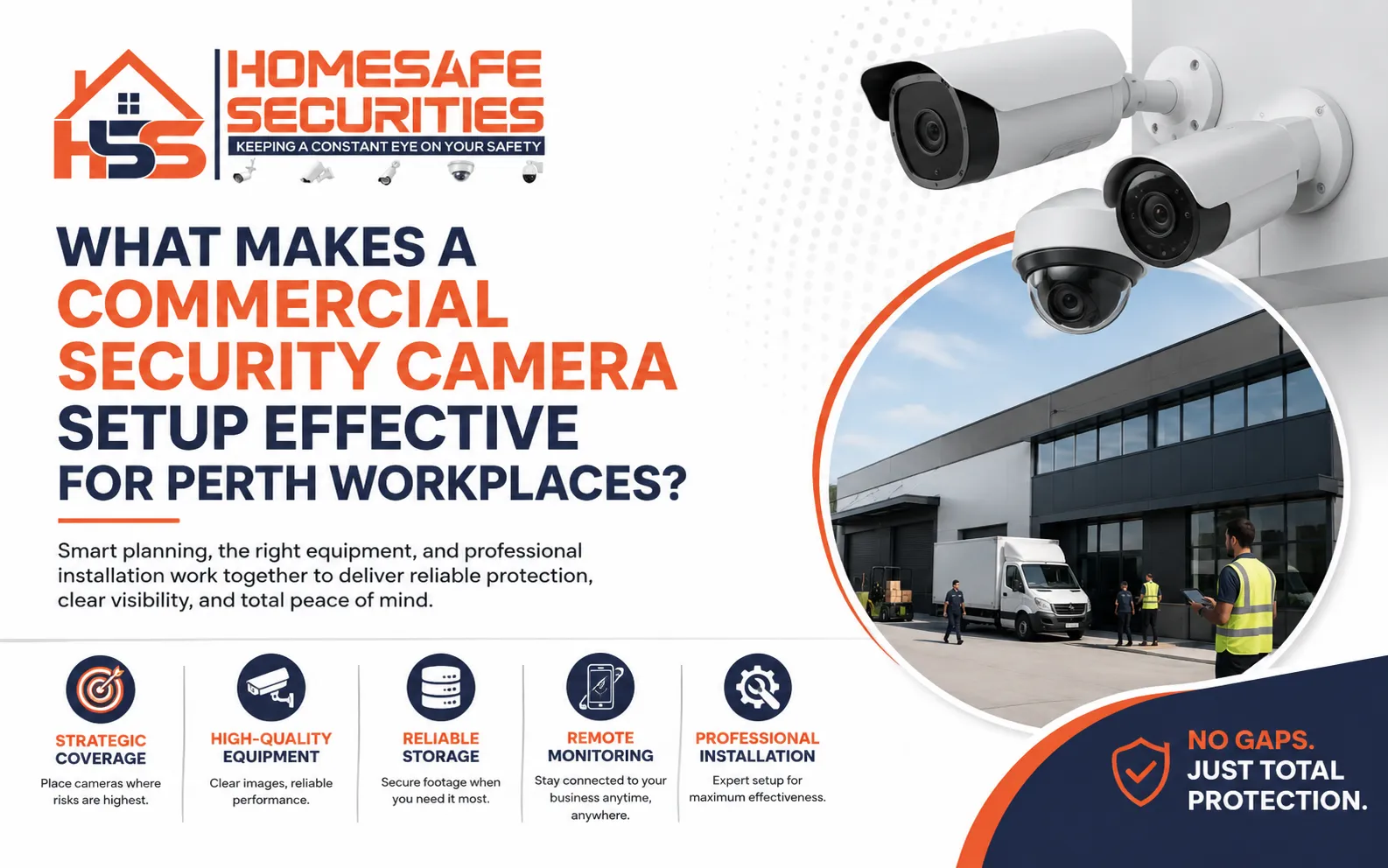
A workplace CCTV system is effective only when it captures useful footage in the places that matter. Image quality may attract attention during product comparisons, but camera placement, lighting, storage, network reliability and everyday usability have just as much influence on the final result.
Planning commercial security cam era installation perth therefore requires more than choosing cameras based on specification sheets. The setup needs to reflect what actually happens across the workplace.
Effectiveness Starts With a Defined Security Objective
A camera overlooking a reception desk serves a different purpose from one monitoring a loading dock. Before deciding where hardware should be installed, businesses should establish the reason for monitoring each area.
Common objectives include observing:
-
Public entrances
-
Staff-only access
-
Deliveries
-
Customer interaction areas
-
Stock movement
-
External boundaries
-
Car parks
-
Valuable equipment
-
Areas that are difficult to supervise directly
The clearer the objective, the easier it becomes to select an appropriate camera view.
Camera Placement Should Follow Activity
The best-looking installation is not necessarily the most useful one. Cameras installed simply because a wall or ceiling position is convenient can miss important activity.
Commercial security cameras perth businesses use should follow movement through the premises.
Observe the Workplace Before Finalising Positions
Spend time noticing how the site functions during opening hours.
Where do customers enter? Where do staff move stock? Which doors are used after hours? Where do couriers stop? Are parked vehicles likely to block a camera?
This practical observation frequently highlights areas that may not seem important on a building plan.
Avoid Installing Cameras Too High Without a Reason
High mounting positions can provide broad coverage and may protect equipment from interference. However, excessive height can reduce useful facial or activity detail depending on the angle and area being monitored.
The appropriate position depends on the purpose of that particular view.
Lighting Has a Major Influence on Footage
Workplaces often contain difficult lighting conditions.
A glass entrance might be bright during the afternoon while the interior behind it remains comparatively dark. Warehouses may contain bright loading entrances alongside shadowed aisles. External cameras may experience very different conditions during the day and at night.
A properly considered commercial security camera installation perth project should evaluate these differences before final positioning.
Look for Common Lighting Problems
Pay attention to:
-
Strong backlighting
-
Direct sunlight
-
Reflections from glass
-
Deep shadows
-
Headlights entering car parks
-
Poorly lit side passages
-
Changes after external lights turn off
Testing the intended view is often more useful than assuming a location will perform well.
Resolution Is Only Part of Image Quality
High-resolution cameras can provide useful detail, but resolution alone does not guarantee usable footage.
Distance, lens choice, camera angle, movement, lighting and recording settings all affect what can actually be seen.
With commercial security cameras perth workplaces install, the important question is not simply “How many megapixels?” It is “Will the recorded image show what we need at this location?”
Match Detail to the Task
A general warehouse overview may need broad situational coverage.
A doorway used for identification may benefit from a more focused view.
A vehicle entry point may need positioning that captures the relevant part of arriving vehicles rather than a wide image of the entire driveway.
Different security objectives call for different views.
Recording and Storage Need Practical Planning
Cameras are only useful after an event if the required footage is still available and can be found efficiently.
Consider:
-
How many cameras are recording
-
Recording resolution
-
Frame rate
-
Recording schedules
-
Storage capacity
-
Motion-based versus continuous recording requirements
-
How frequently footage may need reviewing
Storage planning should be based on actual operational needs instead of selecting capacity without context.
Remote Viewing Should Be Easy to Use
Many workplaces want convenient access to CCTV through compatible mobile or desktop viewing systems.
However, remote access should be configured carefully and explained clearly to the people who will use it.
An effective setup should allow authorised users to understand basic functions such as:
-
Viewing live cameras
-
Selecting individual channels
-
Finding recorded footage
-
Understanding time and date settings
-
Knowing who should have access
Usability matters because a technically capable system offers little benefit if staff struggle to operate it.
Reliability Depends on Installation Quality
Cable routes, connections, recorder placement and network configuration all contribute to long-term performance.
An installation that looks acceptable on day one may become troublesome if cables are poorly protected, equipment is located inconveniently or cameras are positioned where routine activity repeatedly blocks them.
Professional planning helps reduce these avoidable problems.
Why Choose Us
HomeSafe Securities approaches workplace surveillance by considering how cameras need to perform within the customer’s property rather than treating each device as an isolated product.
Businesses investigating commercial security camera installation perth can benefit from discussing intended monitoring areas, practical camera views and how the system will be used after installation.
The goal is to create useful coverage that makes sense for everyday workplace operations.
About Us
HomeSafe Securities assists customers with CCTV and security solutions designed around practical property requirements. This includes considering where visibility is needed and how different areas of a workplace may require different monitoring approaches.
For customers evaluating commercial security cameras perth, the emphasis is on creating a setup that is understandable, purposeful and suitable for the site’s layout.
Conclusion
An effective workplace camera system combines sensible placement, appropriate image detail, suitable storage and straightforward operation. The strongest setup is not necessarily the one with the largest camera count or longest feature list.
It is the system in which each camera has a clear job, the footage is useful and authorised users can access what they need without unnecessary complexity.