
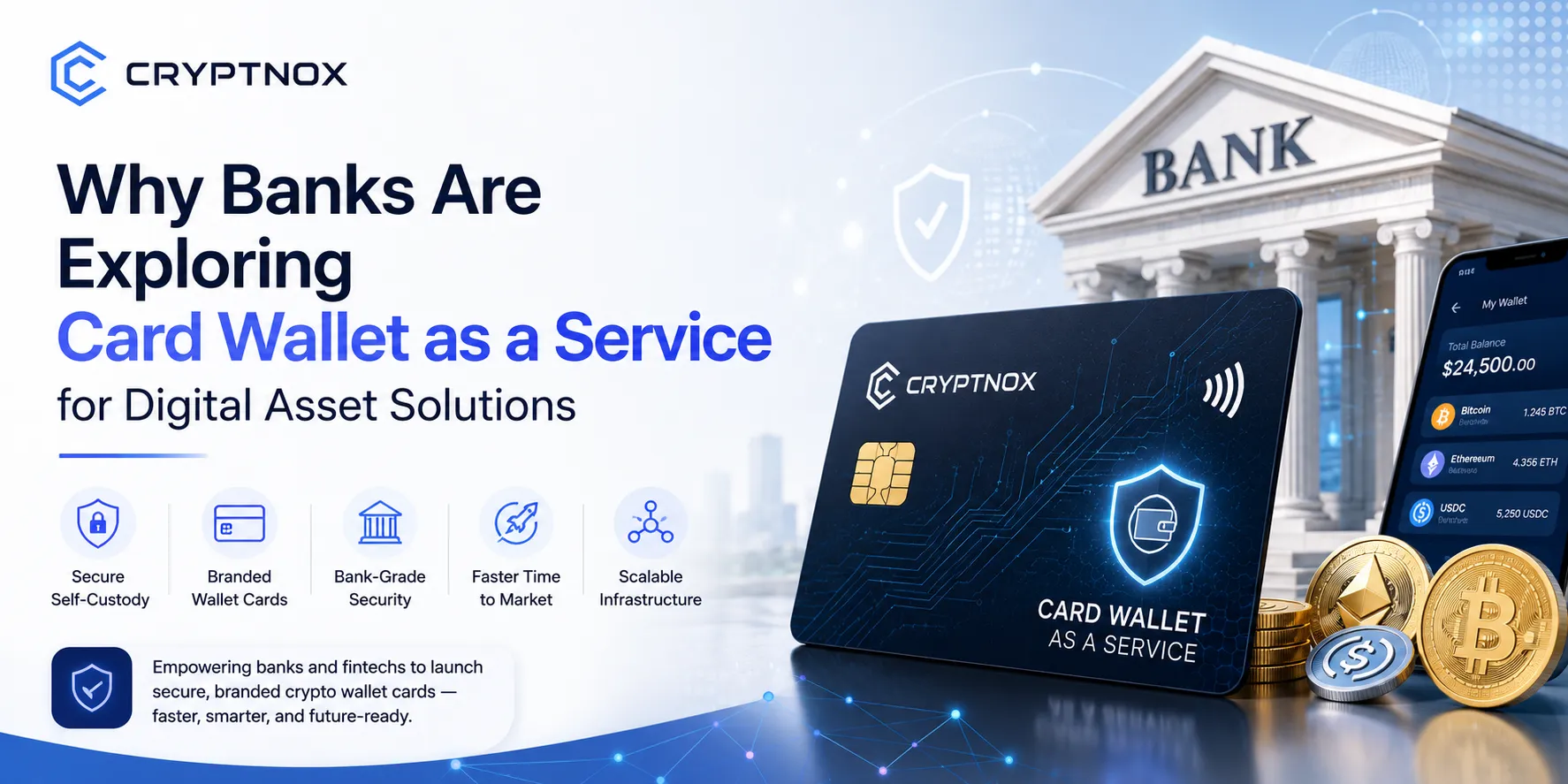
The financial industry is undergoing a significant transformation as digital assets become an increasingly important part of modern banking. Customers now expect secure, convenient, and innovative ways to manage cryptocurrencies alongside traditional financial services. To meet these expectations, banks and fintech companies are exploring new technologies that combine regulatory awareness, enterprise-grade security, and seamless user experiences. One emerging solution is Card Wallet as a Service, a platform that enables financial institutions to offer branded hardware wallet cards without building complex infrastructure from the ground up. By leveraging secure smart card technology and self-custody principles, Card Wallet as a Service is helping banks expand their digital asset capabilities while maintaining strong security and operational efficiency.
What Is Card Wallet as a Service?
Card Wallet as a Service (C-WaaS) is a white-label platform that enables banks, fintech providers, payment companies, and financial institutions to launch secure hardware wallet card solutions under their own brand.
Instead of developing proprietary hardware, secure key management systems, and wallet infrastructure, institutions can adopt an enterprise-ready platform that integrates secure smart card technology with blockchain wallet capabilities.
This model reduces development complexity while allowing organizations to focus on customer experience, digital services, and business growth.
As demand for digital assets continues to increase, Card Wallet as a Service provides a practical path for institutions entering the Web3 ecosystem.
Why Banks Are Investing in Digital Asset Solutions
Customer expectations have evolved beyond traditional banking services.
Today’s users increasingly expect:
-
Secure cryptocurrency storage.
-
Digital asset management.
-
Cross-border payment capabilities.
-
Self-custody options.
-
Integration with Web3 applications.
-
Modern authentication methods.
Banks recognize that digital assets are becoming part of long-term financial strategies rather than short-term investment trends.
By adopting enterprise-grade wallet solutions, financial institutions can expand their service offerings while maintaining strong security standards.
The Role of Hardware Wallet Cards
Unlike software wallets that store sensitive credentials on internet-connected devices, hardware wallet cards protect private keys inside secure smart card hardware.
This hardware-based approach significantly improves protection against malware, phishing attacks, and unauthorized access.
Combined with modern cryptographic technologies, smart card wallets enable secure transaction signing while keeping private keys isolated from external threats.
A White-label crypto wallet cards platform allows banks to deliver this security under their own brand without managing hardware manufacturing or cryptographic infrastructure internally.
Benefits of Card Wallet as a Service for Banks
Faster Time to Market
Building a secure digital wallet ecosystem from scratch requires significant investment in hardware, software, compliance planning, and security testing.
Card Wallet as a Service enables institutions to launch faster using established technology.
Enterprise-Grade Security
Smart card technology protects cryptographic credentials inside tamper-resistant secure elements, reducing exposure to cyber threats while supporting self-custody principles.
Branded Customer Experience
Banks can deliver fully branded wallet cards that align with their existing financial products and customer experience strategies.
This creates stronger brand recognition while expanding digital banking capabilities.
Scalable Infrastructure
As customer adoption grows, institutions can scale wallet issuance without redesigning their underlying technology stack.
Supporting Self-Custody Without Sacrificing Security
Self-custody is becoming increasingly important as customers seek greater control over their digital assets.
Rather than relying entirely on centralized custodians, users can maintain ownership of their private keys while benefiting from secure hardware protection.
This approach aligns with blockchain’s core principles of decentralization while supporting enterprise-grade security practices.
Banks implementing self-custody solutions through smart card technology can offer customers greater independence without compromising usability.
Opportunities for Fintech Innovation
Beyond traditional banking, fintech companies are also exploring Card Wallet as a Service to accelerate product innovation.
Potential applications include:
-
Consumer crypto wallets.
-
Corporate treasury management.
-
Digital payment platforms.
-
Cross-border financial services.
-
Tokenized asset solutions.
-
Digital identity integration.
-
Enterprise authentication.
A robust fintech wallet platform enables organizations to build differentiated financial products while reducing technical complexity.
Security Considerations for Financial Institutions
Banks require security models capable of protecting both customer assets and institutional reputation.
Important considerations include:
-
Secure private key generation.
-
Hardware-based key storage.
-
Cryptographic transaction signing.
-
Secure authentication.
-
Tamper-resistant smart card architecture.
-
Enterprise lifecycle management.
Hardware-backed wallet cards help reduce risks associated with software-only wallet solutions while supporting enterprise deployment requirements.
Why Smart Card Technology Is Gaining Momentum
Smart cards have protected financial transactions and digital identities for decades.
Applying this mature technology to blockchain wallets offers several advantages:
-
Proven hardware security.
-
Familiar card format.
-
Long operational lifespan.
-
Enterprise deployment readiness.
-
User-friendly authentication.
-
Secure offline credential storage.
These strengths make smart card technology particularly attractive for regulated financial institutions adopting blockchain-based services.
The Future of Banking and Digital Assets
The convergence of traditional banking and blockchain technology continues to reshape financial services worldwide.
Banks are increasingly evaluating infrastructure that combines:
-
Digital asset custody.
-
Self-custody capabilities.
-
Hardware-backed security.
-
Enterprise authentication.
-
Digital identity.
-
Tokenized financial products.
Solutions such as Cryptnox Card Wallet as a Service provide financial institutions with a scalable foundation for delivering secure, customer-focused digital asset services while preparing for the next generation of financial innovation.
Conclusion
Digital assets are becoming an integral part of the financial ecosystem, and banks are seeking secure, scalable solutions to meet growing customer demand. Card Wallet as a Service offers an efficient way to launch branded hardware wallet programs without the complexity of developing secure wallet infrastructure internally. By combining smart card technology, self-custody principles, and enterprise-grade security, Card Wallet as a Service enables financial institutions to expand their digital offerings while maintaining trust, security, and operational efficiency. As blockchain adoption continues to accelerate, C-WaaS is positioned to become a key technology for banks and fintech companies building the future of digital finance.