
How Cross-Platform Tools Revolutionise Enterprise Mobile Apps

Key Takeaways
-
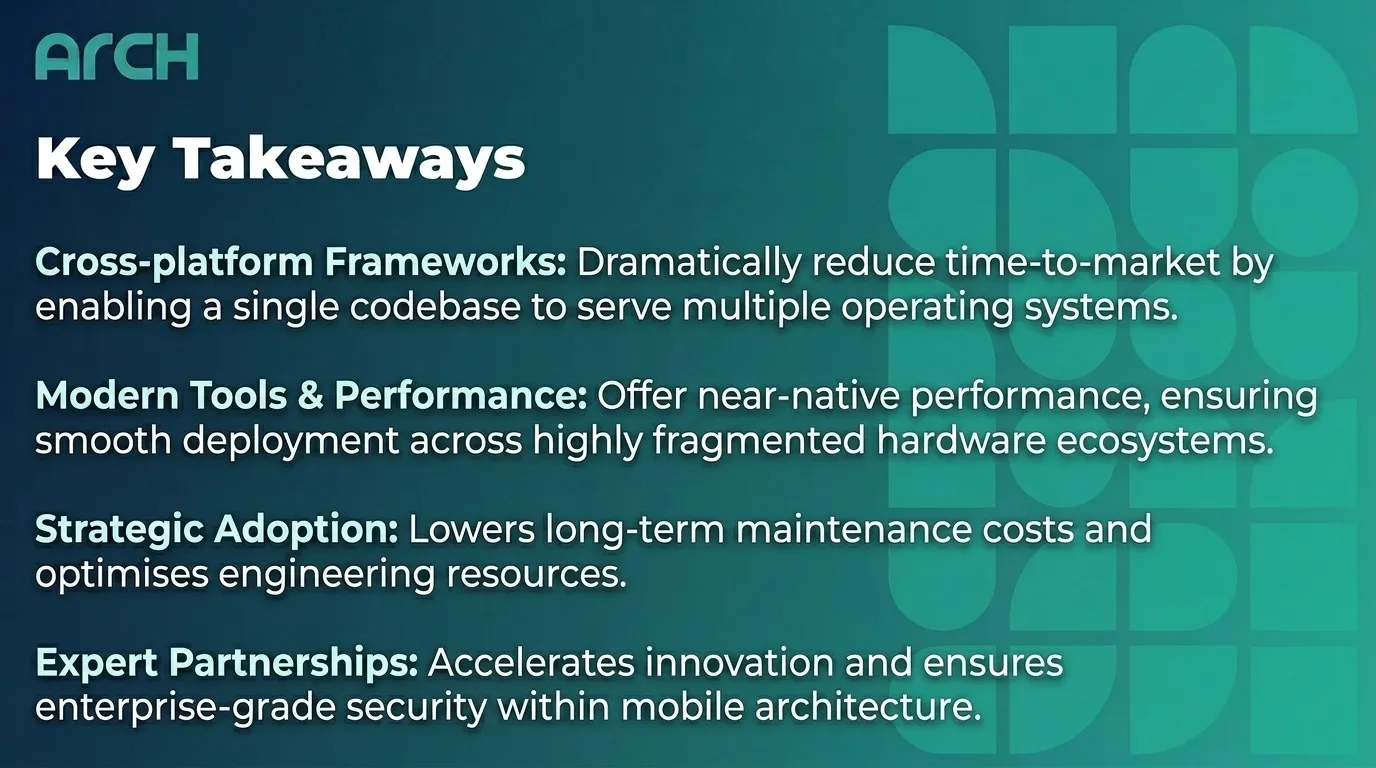
Cross-platform frameworks dramatically reduce time-to-market by enabling a single codebase to serve multiple operating systems.
-
Modern tools offer near-native performance, ensuring smooth deployment across highly fragmented hardware ecosystems.
-
Strategic adoption of these technologies lowers long-term maintenance costs and optimises engineering resources.
-
Partnering with expert developers accelerates innovation and ensures enterprise-grade security within mobile architecture.
The Evolution of Enterprise Mobile Strategy
Modern enterprises face a complex digital landscape where deploying mobile solutions is no longer a luxury but an operational necessity. As teams strive to maintain a competitive edge, the demand for applications that run flawlessly across diverse hardware ecosystems has surged. Hardware fragmentation poses a significant challenge, with disparate operating systems and device capabilities complicating deployment strategies.
To address these hurdles, ambitious teams are increasingly turning to modern cross-platform development tools. These advanced frameworks empower organisations to build and deliver robust applications without sacrificing performance or user experience. By adopting a unified approach, tech leaders can streamline their engineering efforts while ensuring consistent functionality across iOS, Android, and beyond.
Overcoming Hardware Fragmentation
The sheer variety of mobile devices available today presents a logistical nightmare for enterprise IT departments. Managing separate codebases for different operating systems doubles the workload and increases the risk of inconsistent software behaviour. When a critical update is required, synchronising the release across multiple platforms often results in costly delays.
Cross-platform development provides a vital structural solution to this fragmentation. By leveraging tools like Flutter or React Native, teams write a single codebase that dynamically adapts to diverse hardware requirements. This collaborative methodology ensures that new features and essential security patches are rolled out simultaneously, maintaining parity across the entire hardware ecosystem.
Partnering with a strategic web and mobile app development company allows enterprises to fully capitalise on these technical efficiencies. Expert developers possess the precise knowledge required to architect scalable solutions that navigate hardware limitations seamlessly. As a result, businesses can confidently deploy impactful digital products that engage modern users.
Streamlining the Development Lifecycle
Agility is paramount in today’s fast-paced technological environment. Traditional native development often requires siloed teams of specialists, which inherently limits collaboration and slows down production. In contrast, cross-platform tools centralise the engineering effort, allowing developers to focus on core functionality rather than platform-specific nuances.
This unified workflow dramatically accelerates the entire development lifecycle. Enterprises can prototype, test, and deliver functional software at a fraction of the traditional cost and time. Quality assurance also becomes far more manageable, as testers can analyse a consolidated codebase rather than hunting for platform-exclusive bugs.
Furthermore, this streamlined approach allows internal teams to reallocate their resources toward innovation rather than routine maintenance. By optimising the deployment pipeline, tech leaders can respond to shifting internet trends and user demands with unparalleled speed. The result is a highly efficient operational model that consistently drives business value.
Delivering Seamless User Experiences
Historically, cross-platform applications were criticised for feeling sluggish or failing to mimic native interface elements. However, modern frameworks have evolved to bridge this gap entirely, providing access to device-specific hardware components like cameras, GPS, and biometric sensors. This technological leap ensures that applications look, feel, and perform exactly as users expect.
A premium user experience is critical for internal adoption and external customer satisfaction alike. When applications fail to deliver intuitive interfaces or rapid loading times, engagement metrics inevitably plummet. Cross-platform tools now compile to native code, guaranteeing that performance bottlenecks are eliminated before deployment.
Enterprises that prioritise these seamless experiences position themselves as market leaders. By combining confident engineering with a passion for innovation, organisations can build applications that elevate their brand reputation. Ultimately, the ability to deliver flawless digital products across any device is a defining characteristic of modern enterprise success.
Conclusion
The shift towards cross-platform development marks a fundamental evolution in how enterprises deploy mobile solutions. By embracing these modern frameworks, ambitious teams can overcome hardware fragmentation, accelerate their time-to-market, and reduce overall engineering costs. This strategic transition is essential for building a resilient, future-proof digital infrastructure.
As the digital landscape continues to expand, maintaining a unified approach to mobile software will only become more critical. Organisations must leverage the right tools and strategic partnerships to deliver impactful, high-performance applications. Doing so guarantees that they will remain at the forefront of mobile innovation, continuously exceeding the expectations of modern users.
Frequently Asked Questions
What is cross-platform development? Cross-platform development involves creating software applications that are compatible with multiple operating systems, such as iOS and Android, using a single codebase. This approach streamlines the engineering process and reduces the need for platform-specific programming.
How does cross-platform tech handle hardware fragmentation? Modern frameworks utilise dynamic rendering and native component bridging to adapt seamlessly to varying screen sizes, processing powers, and device architectures. This ensures consistent functionality and behaviour regardless of the specific hardware being used.
Does cross-platform development sacrifice app performance? No, contemporary tools like React Native and Flutter compile directly to native code or use highly optimised rendering engines. This allows enterprises to deliver robust applications that achieve near-native performance metrics.